• Home
• Cover Story
• News
• Interview
• Real Location
• CITY REPORT
• Home Solutions
• Industry Event
• Hot New   Properties
• Columns
  Legal Matters
  Home Loan     Advisory
• News Focus
• RP Forum
• About Us
• Advertise
• Partners
• Contact us
• FAQs
• Guestbook
• Sitemap


RP Forum
Neha Nagpal
Readymade luxury Homes
Premium housing that is fast gaining popularity is set to embrace an all-new concept of readymade luxury homes’ with the introduction of pre-fab wood housing.

T his novel concept that is already making waves in European countries has been brought to India by Mac Donald Sarin, a New Delhi based real estate asset management company. Mac Donald Sarin has tied up with Lockwood International, a leading New Zealand – based wood constructions firm for marketing their high end wooden homes in India.

more>>>                                                                                 Post your opinion
 
Archives

Vol 1 , Issue2
NOT TOO REALTY FRIENDLY BUDGET
A people-friendly and poll-oriented Budget for 2008-09 but not so favourably inclined towards the real estate despite some sops here and there, the doyens of the sector feel. Where is the industry status, what about affordable housing and why no relief from service tax on rentals? These are some of the questions asked.

Vol 1 , Issue2
Model For Low-cost Housing
West Bengal’s unique and popular PPP model in housing has proved to be a landmark in providing affordable housing to the masses. But can this model be replicated across the country?

Vol 1 , Issue2
Realty Outlook 2008
After a slowdown in 2007 triggered by soaring property prices and high interest rates, the real estate outlook for the new year looks promising.

Vol 1 , Issue2
India a Hot Destination For Smart Money?
Notwithstanding the hype surrounding India as a hot destination for real estate investors, serious challenges — related to lack of transparent information, regulatory mechanisms, land acquisitions and execution capabilities — are expected to pose significant risks in deriving good returns to investment.

Vol 1 , Issue2
Is RBI Policy Anti-realty?
High lending rates triggered by the RBI's tight monetary policy, focused on containment of inflation, have hit real estate demand hard. Although demand for property still prevails, the market is subdued owing to high mortgage rate and the current monetary policy, restricting credit to developers.

Vol 1 , Issue2
‘Locking In’ Speculation
Should developers put a ‘lock-in’ clause for property buyers to check speculative selling? (This clause means that buyers will not be allowed to trade in their property for a fixed period of time.) The builders’ community is divided on the issue. Some believe it violates buyers’ rights, while others think it can help the industry.

Vol 1 , Issue2
Flexible Loan Repayment
Should there be a ceiling on home loan rates (along with flexibility in repayment norms? The notion of flexibility finds general acceptance and cheaper loans for the non-affluent are favoured, thereby implying a ceiling.

Vol 1 , Issue2
Redefining Commercial Realty
The RBI is in the process of reworking the definition of Commercial Real Estate (CRE) in order to exclude hospitals, hotels and educational institutions from its ambit as the business dynamics and risk profiles of social infrastructure vary from the CRE.

Vol 1 , Issue2
No Takers For This Tax
Unjustified. Illegal. Inflationary. These are the adjectives that are being used to describe the service tax on rentals of immovable commercial property proposed in the latest Union Budget. Rent doesn’t stand for service rendered to anybody, so goes the argument. Running agreements are likely to be disrupted. The only silver lining seen is possible increased transparency in sale and purchase transacations of properties.

Vol 1 , Issue2
For & Against FII Status To FDI In Realty
The RBI has declined to accord FII status to FDI brought in via private placement of equity by real estate firms whose projects do not comply with the guidelines of the Dept. of Industrial Policy and Promotion. The industry as a whole feels that attitude is coming in the way of big players leveraging their existing schemes for foreign investment. Individual opinions among professionals vary. Some support the official caution, some want the builders to first qualify for preferential treatment, while some others reject the “asset bubble control” argument. It’s a mixed reaction.

Vol 1 , Issue2
Low-cost Housing A ‘Joint Responsibility
The government and the private developers must work hand in hand in providing affordable housing to the low-income groups. This is the general consensus among the industrialists who were asked whether building cheaper houses for the weaker sections was solely a government responsibility. Mutual synergy, land at subsidized rates and micro-financing are seen as some of the possible measures.

Vol 1 , Issue2
Interest Rate For Second Property Loan
When developers and experts were asked if there is a case for a higher interest rate for second property loan, most of them answered in the negative arguing that it would slow down real estate growth. But it was also pointed out that second home buyers constitute a small proportion of property buyers and raising the interest rate would hardly impact the sector.

Vol 1 , Issue2
Can A Regulator Boost Infrastructure?
Do we need a regulator with financial autonomy and institutionalised mechanism to boost infrastructure? What should be a perfect recipe for giving a thrust to infrastructure? The views of those associated with the sector differ: while some say it would be a welcome move and help expedite infrastructure development, others are skeptic arguing such a body would mean more bureaucratic hurdles.

Vijender Dahiya, GM (Sales), Nahar Builders & Developers Ltd It should be made mandatory to appoint a regulator since proper infrastructure is vital to our country's economic growth. In India, infrastructure development is mostly a concern of the state and the people in charge of such bodies are mostly civil servants or bureaucrats who are not technically qualified. There is a need for trained professionals to be made in charge of such important portfolios. Moreover, the government and private players also need to come together if they are serious about boosting infrastructure facilities across urban and rural areas.

Vol 1 , Issue2
Construction Workers Need Proper Shelter
We construct tall and costly buildings for various uses but tend to forget the plight of the labourers who use their muscles to raise the edifices brick by brick. The fact that they are forced to live in shanties in unhygienic conditions while the structures take shape is generally ignored. But most of the developers are basically conscientious and welcome the norms the government has proposed for them to provide mandatory housing facilities for construction workers. However, the builders have their own ideas too on this subject.

Vol 1 , Issue2
Illegal Developments And Delhi’s Master Plan
When experts were asked if inefficient implementation of Master Plan has been responsible for the mess of illegal developments in Delhi, most of them answered in the affirmative citing lack of will and multiplicity of authorities as the reasons. Unethical practices by our politicians who manipulate and exploit unstable population to gain power were also blamed for the sorry state of affairs.

Vol 1 , Issue2
Are Banks Excessively Exposed To Home Loans?
The RBI panel has recommended removal of priority status to home loans up to Rs 10 lakhs on the ground that banks are excessively exposed to home loans which in turn is crowding out the much needed credit flow to other priority sectors. This has been opposed by Indian Bank Association on the ground that housing is a critical need and requires a priority sector status. RP spoke to the representatives of some leading developers and financial institutions to know their views. Here’s what they had to say.

Vol 1 , Issue2
Is Govt Move To Levy Service Tax On Builders Unjustified?
Developers claim they are already weighed down by multiple taxes on various fronts, not to speak of the cost of raw materials, which is already going through the roof. Under such conditions, levying of fresh tax will lead to a further increase in the cost of projects, which the developers would be forced to pass on to the consumers. They are also of the view that developers are not service providers and hence the move to levy service tax on them is not justified.

Vol 1 , Issue2
Budget Approach To Real Estate Raises Eyebrows
The latest Union budget hasn’t been kind enough to the country’s real estate. This is more or less the opinion of those who play a major part in this field. The rise in service tax is seen as a big deterrent. Altogether, there is no great news for the housing sector, they feel.

Vol 1 , Issue2
Does Professionalism Of Indian Real Estate Industry Have A Direct Bearing On FDI Inflow?
Professionalism is a crucial factor for attracting FDI inflow, opine real estate players and experts alike. They cite the maxim that the more professional we are, the greater the chance of attracting FDI into the domestic real estate market.

Vol 1 , Issue2
Great Expectations From The Budget
Real estate players are pinning their hopes on Budget 2006-2007, expecting abrogation of retrogressive laws pertaining to the real estate sector, relaxation of certain provisions and a continuation of the thrust on reforms that are opening up fresh opportunities of growth.

Vol 1 , Issue2
“Is environmental clearance for builders, now mandatory, proving to be a roadblock in real estate growth?”
The realty players are not unanimous in their views. Somebody says it won’t create any problem, another feels this amounts to total obstruction while others accept the new rule in principle but want the involvement of local authorities for the sake of speedy clearance.

Vol 1 , Issue2
Should FDI Be Encouraged In Group Housing Societies?
Developers and experts agree that FDI in group housing societies will benefit end-users as it will make better housing available at affordable prices.

Vol 1 , Issue2
Why should housing loans be skewed in favour of salaried class?
Easy verification of income, assurance of EMI repayment by way of salary deduction and stability of income are some of the reasons why banks and financial institutions find it easier to lend housing loans to the salaried class.

Vol 1 , Issue2
Are housing markets more prone to bubbles than stock markets?
No, say all the developers. Demand is steady and rising, fluctuations always stabilize, large transaction costs discourage trading in houses and investors tend to believe that prices cannot fall. Stock markets are volatile in nature.

Vol 1 , Issue2
Do we need a law for management, regulation and control of real estate?

Vol 1 , Issue2
IS THE PROPERTY BUBBLE BURSTING?
What is the truth about the real estate scenario in India? Is the property bubble bursting? Or is price correction being misconstrued as end of a boom phase? Read on to know the views of leading industry players, consultants and homeowners.

Vol 1 , Issue2
Should There Be Service Tax On Apartments?
The imposition of 10 percent service tax proposed in the Budget has evoked strong protest from a cross-section of people. Read on to know the opinion of leading real estate players and consultants.

Vol 1 , Issue2
Fix Norms For Property Transactions
Should property transactions be based on carpet areas only? The issue might trigger arguments in support as well as against it but there is a general unanimity that the norm should be fixed once and for all so as to make the transactions more transparent. Realty Plus records the views of industry experts on the issue.

Vol 1 , Issue2
Should SPVs Be Formed To Implement Satellite Townships?
If the government came in purely as an equity player in terms of providing land leaving the rest to the private players, creation of SPVs would be a welcome move, say industry players. It would not only impact rising land prices but also prove to be a boon for real estate development in tier II & III cities. The SPVs can facilitate in raising the huge amount of fund needed to build satellite towns.

Vol 1 , Issue2
A Step In The Right Direction
Leading real estate developers and consultants express their views to Rajesh Kulkarni and Sunaina Khazanchi on how 100 percent FDI in construction sector cleared by the government would impact the real estate sector.

Vol 1 , Issue2
Great Expectations
Rajesh Kulkarni and Sunaina Khazanchi spoke to top real estate developers and those associated with the industry to find out their expectations from the Budget.

Vol 1 , Issue2
Suburban Homes Versus Metro Homes
More and more metro dwellers are increasingly showing a preference for suburban homes. If affordable rates have been a key attraction for many, others have sought the relaxed atmosphere of the suburbs. This month’s RP Forum collates the opinions of people from different metros to find out the reasons behind the emergence of the suburb as a hot favourite.

Vol 1 , Issue2
Restrictive land use policy in Mumbai
Low floor space consumption has always led to complexities in the real estate development of Mumbai, the regional economic powerhouse. An average of 2.9 square metre of floor space per person is perhaps one of the lowest residential floor area per person in the world. It has been seen that cities with topographical problems like the ones Mumbai city has, compensate the lack of land by increasing the height of buildings. Not so in Mumbai. The restrictive land use policy has been in the eye of the storm for quite sometime now.

Vol 1 , Issue2
Himachal Rolls Out Red Carpet For Non Resident Property Buyers

Vol 1 , Issue2
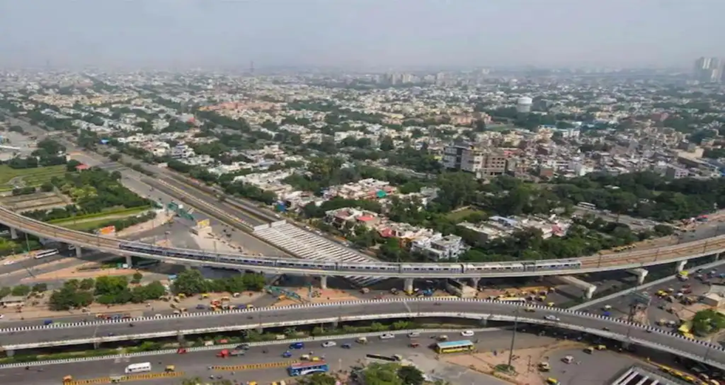
Real Estate Ride on Delhi Metro

: In 2002, Delhiites began riding the Metro Rail. In 2004, Delhi’s real estate is riding it. Property development along the Metro route is the new mantra.


Vol 1 , Issue2
Constructing a Dream Home

A home may be a dream for many, but constructing it can be a nightmare! Ask anyone who has gone through the ‘ordeal’ of constructing a home! But proper planning, knowledge of the home building process and selecting the right contractor can lessen the pain of this ordeal.


Vol 1 , Issue2
3038 km of Golden Quadrilateral Completed
Much of the work on the 5,846-km Golden Quadrilateral project is over A length totaling 3038 km is ready and the rest is under preparation with 76 different civil works contractors busy on the job. Operations on the East-West and North-South corridors and 126-km Ahmedabad-Baroda expressway has started. Travel on the latter stretch will take only an hour in future, as against three hours now.
 
 
Print Edition
Newsletter


An exchange4media and First franchising joint venture.
An exchange4media publication.

This site is best viewed in Internet Explorer 5 at 800 X 600 resolution
Copyright © : 2008 Adsert Web Solutions Pvt. Ltd. New Delhi, India. All rights reserved.
Hosted by